
Loading...
Serving St. Cloud, FL and surrounding areas. (689) 214-9067
A four season sunroom is a real room - fully insulated, climate-controlled, and built to Florida's hurricane standards. It works on a 95-degree August afternoon just as well as a cool January evening.
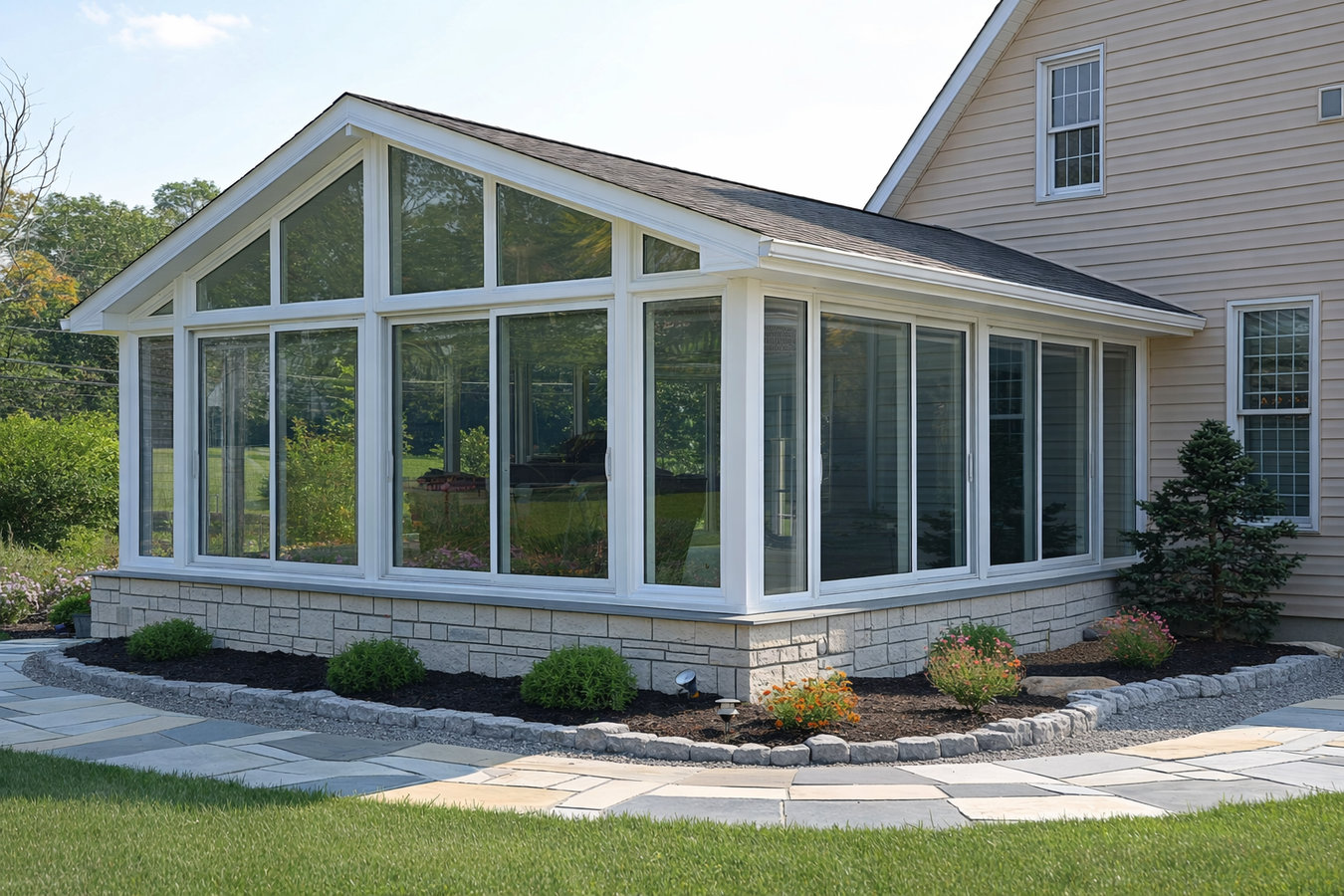
Four season sunrooms in St. Cloud, FL are fully enclosed additions with insulated walls, a solid roof, energy-efficient glass designed to block Florida's heat, and a heating and cooling connection that keeps the room comfortable year-round - most projects take eight to fourteen weeks from contract to completion.
The difference between a four season room and a standard screened porch comes down to one practical question: can you use it in July? In St. Cloud, where temperatures push into the low-to-mid 90s with high humidity from May through September, the answer for most outdoor spaces is no. A four season sunroom changes that. The glass is selected to block the sun's heat before it enters the room, the walls are insulated to hold temperature, and the HVAC connection means your air conditioner is actually sized and connected to manage the space.
If you are still deciding between a full four season room and something with less climate control, the three season sunroom page covers the tradeoffs honestly. And if you want to understand the broadest version of what year-round living space looks like, the all season rooms page walks through additional design options for Central Florida homeowners.
If you walk past your back porch every summer morning and never use it because the heat and humidity make it unbearable, your outdoor space is not working for you. St. Cloud's summers are long - a screened enclosure simply cannot keep the heat out, and a four season sunroom gives you that space back for all twelve months.
If you have a basic sunroom or three-season room that gets too hot in summer and drafty on cool January evenings, you are paying for space you cannot fully use. In St. Cloud, where even January can swing from warm afternoons to surprisingly cool nights, a room that cannot handle temperature changes sits empty more than it should.
Foggy glass, mold on the walls, or a musty smell after rain are signs your existing enclosed space was not built to handle Florida's humidity. These problems get worse over time and can eventually affect the wall of your main house where the two structures connect.
If your family has outgrown your home's interior but a full room addition feels too large, a four season sunroom is a practical middle ground - adding a home office, reading nook, or casual dining area without expanding your home's main footprint.
Every four season sunroom we build starts with the same foundation: a proper concrete slab, framing that meets Florida's wind-load requirements, and glass rated for both heat performance and impact resistance. From there, the details vary based on how you plan to use the room and what your budget allows. Some homeowners want a simple, clean extension of their living room - others want a dedicated home office or morning room with its own thermostat zone. Both are straightforward to build well.
For homeowners who are not ready for a full four season build, we also offer three season sunrooms as a starting point - with the understanding that in Central Florida's climate, most homeowners eventually wish they had gone with full climate control from the beginning. If your goal is a room that works all year, starting with a four season build is almost always the better long-term value. We also build all season rooms for homeowners who want expanded design options beyond the standard sunroom footprint.
Insulated walls, impact-rated glass, and a full HVAC connection - the baseline for a room that works every day of the year in Central Florida's climate.
For homeowners who want the most energy-efficient option - glass with superior heat-blocking properties that keeps the room cooler and reduces cooling costs over time.
A separate thermostat zone for the sunroom so you can control its temperature independently from the rest of your home - useful for rooms used on different schedules.
Flooring, trim, electrical outlets, and lighting matched to the rest of your home so the sunroom feels like it was always part of the original floor plan.
St. Cloud averages over 230 sunny days per year. That sounds like good news for a sunroom - and it is, if the room is built for it. Without high-performance glass and a properly sized cooling system, that same sunshine turns your sunroom into an unusable heat trap from May through September. That is more than five months of every year. The homeowners in St. Cloud who get the most out of their four season sunrooms built them with glass that actually blocks Florida's heat load, not standard panels that look the same from the outside but perform very differently inside on a July afternoon. ENERGY STAR certified windows and glass panels are independently tested to meet energy performance standards - that certification matters more in Central Florida than almost anywhere else in the country.
The other factor that shapes four season sunroom projects in this area is the permit and inspection process. St. Cloud's active building departments - both the City of St. Cloud and Osceola County - require permits and multi-stage inspections for any permanent addition. Homeowners in St. Cloud and neighboring Celebration both benefit from this process, even if it adds a few weeks to the front end of a project - because what comes out the other side is a room that is documented, insured, and legitimately part of your home.
When you reach out, we will ask where the sunroom would go, roughly how large you are thinking, and how you plan to use the space. This helps us understand your project before visiting - and we respond within one business day.
We visit your home, measure the space, look at how your house is built, and talk through your options. A written estimate follows within a few days, clearly breaking down foundation work, glass type, roofing, interior finishing, and permit fees.
Once you sign, we submit the plans to the City of St. Cloud or Osceola County. This process typically takes two to six weeks - we factor that into your timeline from the start and update you throughout.
We prepare the site, pour the foundation, frame the walls, install the glass and roof, and finish the interior. County inspectors check the work at key stages. We walk through the finished room with you before we leave.
We will walk your property, answer every question you have, and give you a detailed written quote. Permit slots in Osceola County fill up - the sooner we submit your plans, the sooner you are in your finished room.
(689) 214-9067We hold an active Florida state contractor's license and carry full liability and workers' compensation coverage. You can verify our license directly through the Florida Department of Business and Professional Regulation before you commit to anything.
We submit every permit ourselves and attend every required inspection. Your addition is documented with Osceola County from start to finish - protecting your insurance coverage, your home's resale value, and your peace of mind.
We use high-performance glass specifically rated to block Florida's intense heat load - not standard glass that turns your sunroom into an oven by mid-morning. The right glass is the difference between a room you use every day and one you avoid from June through September.
We ask about your HOA requirements before finalizing any design. St. Cloud neighborhoods like Harmony and Turtle Creek have specific rules about exterior additions, and we know what most associations require before we submit for approval.
A skilled sunroom builder, proper permits, and materials chosen for Florida's specific conditions are not optional extras - they are what separates a room that holds its value from one that creates problems. You can verify contractor license status at the Florida Department of Business and Professional Regulation, and review permit requirements at the Osceola County Building Division.
A lower-cost starting point for homeowners who want glass-enclosed outdoor space and plan to add climate control later.
Learn MoreExpanded design options for homeowners who want year-round usability with more flexibility in layout and materials.
Learn MoreOsceola County permits take time - calling now puts your project at the front of the schedule before the busy season begins.