
Loading...
Serving St. Cloud, FL and surrounding areas. (689) 214-9067
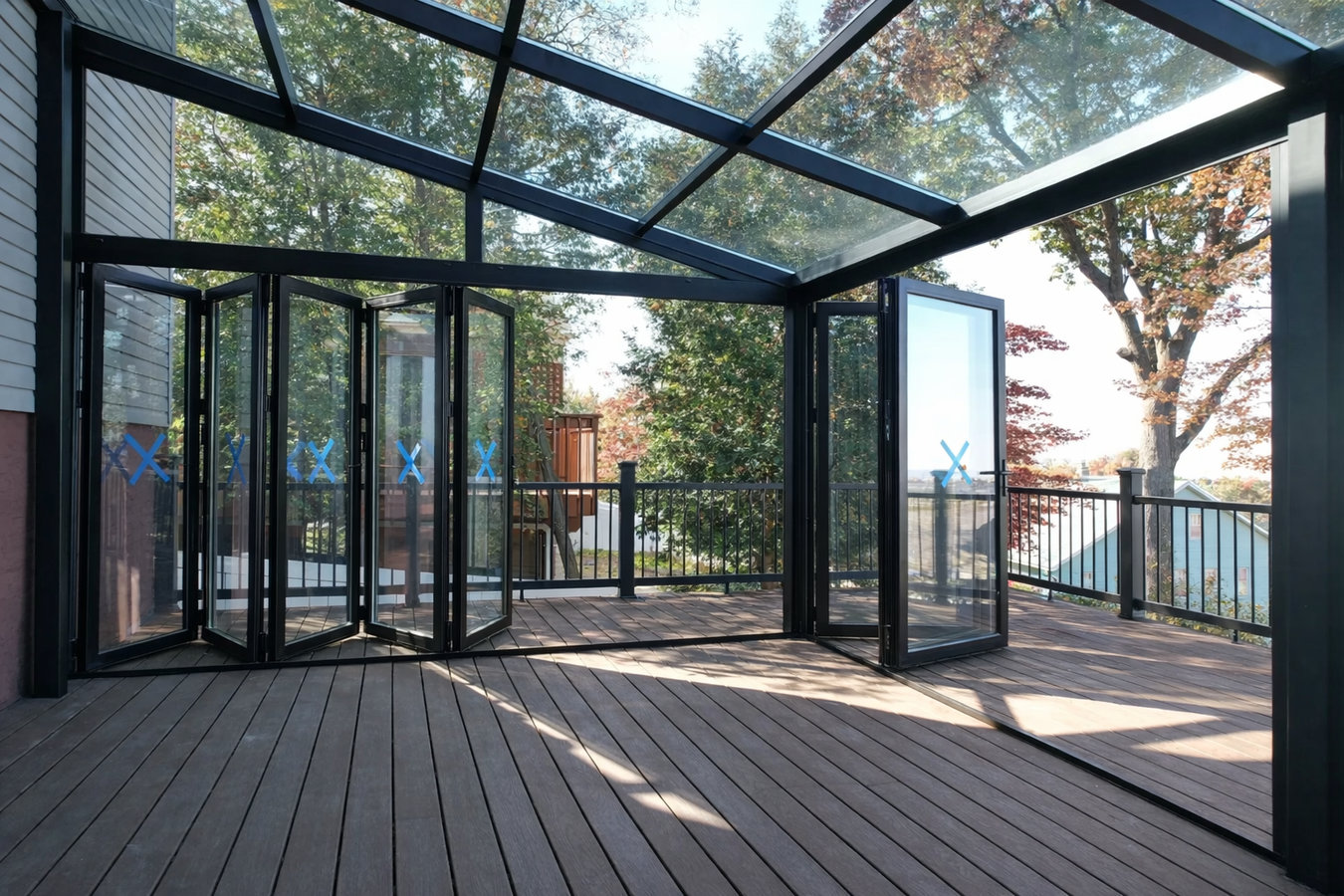
A screened porch is no match for a St. Cloud summer. We build fully glass solariums with heat-rejecting low-E glazing so you can actually use the room year-round.
Solarium installation in St. Cloud means building a foundation, erecting aluminum or steel framing, and fitting engineered glass panels on all sides including the roof - most projects run eight to sixteen weeks from contract signing to final Osceola County inspection, with two to six weeks of that time in the permitting phase before construction can legally begin.
A solarium differs from a standard sunroom in one key way: glass on every surface, ceiling included. That means you get maximum natural light and an open, bright feeling that a walled sunroom cannot match. In St. Cloud's climate, getting the glass right is not optional - standard glass will make the room unusable from May through September. If you are weighing options and want to compare a full glass room with a more traditional enclosed space, our custom sunrooms page covers that comparison in detail.
Every solarium we install in St. Cloud is permitted through Osceola County's Building Division and passes independent inspections at multiple stages. That record protects your home at resale and confirms the structure meets Florida's wind-load and glass-performance requirements - which are stricter than most states because of hurricane and tropical storm history.
If your back porch is unusable from May through September because the heat and afternoon storms make it miserable, that space is not doing its job. St. Cloud's subtropical summer is relentless. A solarium with heat-rejecting glass and air conditioning turns that same footprint into a room you can actually use twelve months a year.
If you have a sunroom or glass porch that swings between stifling in summer and chilly on winter nights, the glass or insulation in that space is not performing for Central Florida's climate. A room that cannot hold a comfortable temperature is a room you are paying to heat and cool without getting any real benefit.
St. Cloud receives well over 50 inches of rain annually, and many neighborhoods near the lakes or in lower-lying areas see standing water after storms. If your patio or porch area collects water or stays damp for days, a properly built solarium on a raised slab with designed drainage can solve that and restore usable outdoor living space.
Many homeowners in Central Florida want a bright, plant-filled room to read or work in natural light. Without the right glass, that dream turns into a room where plants scorch and people sweat. If you have tried and failed to create that kind of space because of the heat, a solarium with low-E glass is the solution you have not tried yet.
Our solarium installation service covers the full project from foundation assessment through county final inspection - including foundation or slab work, aluminum or steel framing, engineered glass panels, doors, operable windows, and an HVAC plan designed for Central Florida's heat load before the first panel goes in. For homeowners who want a fully enclosed room but prefer solid insulated walls rather than all-glass construction, our patio cover installation page covers a shade-focused alternative that starts outdoors.
We also handle HOA documentation for homeowners in St. Cloud's planned communities. Many neighborhoods near East Lake Toho and along the Narcoossee Road corridor have active architectural review boards. Some restrict glass roof structures or require specific framing colors. We prepare the submission package your HOA needs and coordinate it with the county permit timeline so the two processes run in parallel rather than in sequence. We also offer a range of glass options depending on your budget and your lot's sun exposure, and we explain the tradeoffs clearly in writing before you sign anything.
Best for homeowners who want a fully designed glass room built to match their home's architecture, with glass specified for St. Cloud's heat and humidity rather than a national standard.
Best for homeowners with an existing concrete slab who want a faster, more budget-friendly path to a glass room - prefabricated panels reduce on-site labor time significantly.
Best when no existing slab is available or when lot conditions in St. Cloud require drainage planning before the room can be built - includes full site assessment and foundation design.
St. Cloud sits in Osceola County's subtropical climate zone, where summer temperatures regularly reach the low-to-mid 90s and humidity stays high from May through October. A solarium built with standard glass in this climate will trap heat and become genuinely unusable for half the year - this is the single most important specification decision in the entire project. Florida also has some of the strictest building standards in the country because of its hurricane history, which means the glass, framing, and anchoring system must meet wind-load requirements that go well beyond what most other states require. Homeowners in Kissimmee and surrounding communities face identical requirements because the entire region falls under the same county building jurisdiction.
St. Cloud's terrain also matters. Much of the city sits on relatively flat land with a water table that can be quite shallow, especially in areas near East Lake Toho and the numerous retention ponds throughout newer subdivisions. This affects what kind of foundation your solarium can safely sit on - some lots need additional drainage planning or a raised slab to keep the structure dry over time. Homeowners out in Poinciana face similar ground conditions, and our team is familiar with the lot assessment process across the entire service area. A quote that does not include a site visit and a soil or drainage conversation is not a complete quote.
For more on what Florida's building standards mean for your glass room, the Florida Building Commission publishes the current statewide code, and the U.S. Department of Energy has helpful guidance on what low-E glass does and why it matters in hot climates.
The first conversation takes about fifteen minutes. We ask about the space, how you plan to use it, and whether you have an HOA. Within one business day we schedule an in-person visit - nothing gets priced accurately without seeing your lot and existing structure first.
We visit to measure the area, check ground conditions, and review how your home connects to the proposed location. You receive a written breakdown covering foundation, framing, glass package, and HVAC connection - so costs are clear before any contracts are signed.
Once you approve the design and sign a contract, we submit the permit application to Osceola County and prepare any HOA documentation. Permit approval typically takes two to six weeks - we track the status and keep you informed so you never have to chase the building department.
With permits approved, we complete foundation work, framing, glass installation, and HVAC connection. A county inspector visits before the project closes. We then walk through every detail with you, address any punch-list items, and hand over your permit documentation before final payment.
Free on-site estimates. We handle Osceola County permitting and HOA documentation from start to finish. No permit surprises, no pressure.
(689) 214-9067We handle every step - application, plan review, inspection scheduling, and final closeout. When construction is done, you have a legal, inspected room with a documented permit on file, protecting your home's value and simplifying any future sale.
Every solarium we build in St. Cloud uses low-emissivity glass chosen for Central Florida conditions, not a national catalog default. We do not substitute standard glass to lower the quote - the glass package is what determines whether your room is comfortable in July or not.
St. Cloud has a high concentration of HOA-governed communities, including areas near East Lake Toho and new developments along Narcoossee Road. We prepare the architectural review package your HOA needs and coordinate the timing with your county permit application so neither process holds the other up.
St. Cloud's relatively flat terrain and shallow water table in some areas - especially near lakes and wetlands - affect what kind of foundation your solarium can safely sit on. We assess your specific lot conditions at the site visit and design the foundation accordingly, not based on a generic regional default.
Every one of these commitments traces back to the same thing: we build in St. Cloud regularly and understand what actually determines whether a solarium succeeds or fails in this climate and under this county's permit process. That local experience is what separates a room you enjoy from one you regret.
A shade-first approach to outdoor living - permanent covered structures built to Florida wind standards without the all-glass glass room commitment.
Learn MoreFully designed sunrooms with solid insulated walls and large windows - a climate-controlled alternative to an all-glass solarium.
Learn MorePermit slots fill up - contact us now to lock in your on-site visit before Osceola County's building calendar gets backed up for the season.