
Loading...
Serving St. Cloud, FL and surrounding areas. (689) 214-9067
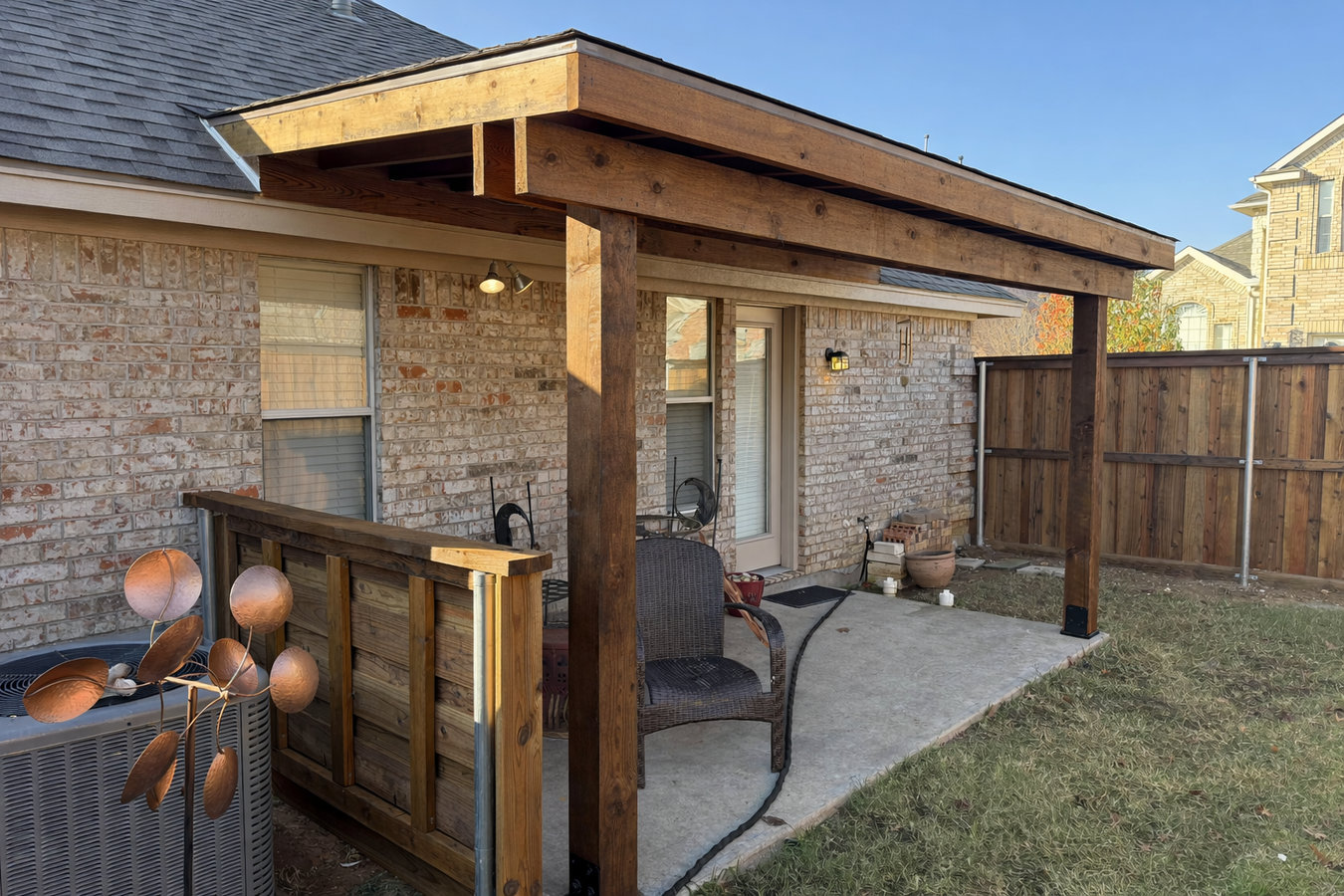
St. Cloud summers make an exposed patio unusable for months. We install permanent aluminum patio covers built to Florida wind standards so your backyard works year-round.
Patio cover installation in St. Cloud means attaching a permanent aluminum roof structure to your home, building it to Osceola County permit standards, and completing a county inspection before the job is officially closed - most installations take one to three days of active construction once permits are approved, with permit approval adding one to three weeks to the overall timeline.
A patio cover is the most direct way to reclaim your backyard in Central Florida's climate. It gives you real shade during the morning heat and protects the space from the afternoon thunderstorms that roll through St. Cloud from May through October - almost daily during peak summer. If you are weighing whether to go further and fully enclose the space, our sunroom design page walks through what that step looks like and what it costs compared to a covered patio.
Every cover we install in St. Cloud is pulled with an Osceola County building permit and passes a final county inspection. That documentation stays with your home's record permanently - which is exactly what you want when you sell or file a storm-related insurance claim.
If you find yourself staying inside during St. Cloud's long storm season because your patio is too hot or gets drenched the moment afternoon storms roll through, the space is not working for you. A solid-roof cover changes that immediately - you get shade in the morning and rain protection all afternoon, without waiting out the summer indoors.
Central Florida's UV intensity and humidity are genuinely hard on anything left exposed. If your outdoor furniture, cushions, or even the back door itself are showing sun damage or rust within a year or two of purchase, it is a sign your patio needs shade and weather protection. A solid-roof cover extends the life of everything kept underneath it.
If you have an older wood pergola or aluminum awning that is sagging, separating from the house, or showing visible rust and rot, it is worth replacing rather than patching. Older covers installed without permits may also fall short of current Florida wind requirements - which matters for both safety and insurance claims after a storm.
In St. Cloud's real estate market, a permitted, well-built patio cover is a genuine selling point - especially for buyers moving from states where outdoor shade is less of a daily concern. If your backyard currently has nothing but an exposed concrete slab, adding a covered area before listing can make your home noticeably more competitive without a major renovation budget.
Our patio cover installation service covers the full project - structure design, material selection, permit application, post and ledger installation, roof panel fitting, and county final inspection. We also coordinate any electrical work for ceiling fans or lighting as part of the same project rather than treating it as an add-on you have to arrange separately. For homeowners who want to go further than shade and full weather coverage and fully enclose their outdoor space, our patio enclosures page covers the next step from a covered patio to a fully enclosed room.
For St. Cloud homeowners in HOA-governed communities, we handle the architectural review submission alongside the county permit application. Many planned communities near Narcoossee Road and the Harmony development have specific guidelines about cover colors, materials, and heights. We prepare the submission package your review board needs and coordinate the timing so HOA approval and county permit approval move in parallel. We also walk through the setback requirements for your specific lot - the minimum distance the structure must sit from your property line - so you do not encounter a compliance issue after the posts are already in the ground.
Best for homeowners who want maximum rain protection and shade, connected directly to the home's fascia - the most common choice for St. Cloud backyards dealing with daily summer storms.
Best when keeping the covered space cooler is a priority - foam-core insulated aluminum panels reduce heat transfer significantly compared to single-skin aluminum, making the space noticeably more comfortable in summer.
Best when the home's roofline or lot layout makes attachment difficult - a freestanding structure with its own posts works in any yard configuration and does not require modifications to the existing roof.
St. Cloud sits in what is sometimes called the lightning capital corridor of the United States - Central Florida sees more lightning strikes per square mile than almost anywhere else in the country. From May through October, powerful afternoon storms are a near-daily event. That is the single biggest reason homeowners here choose solid-roof patio covers over open pergola designs - you want to be outside even when the sky opens up, and an open pergola does nothing when real rain arrives. Florida also has some of the most demanding structural requirements in the country for attached outdoor structures, specifically because of this storm history - which means a patio cover built to pass Osceola County inspection is built to a meaningfully higher standard than what you might find in another state. Homeowners in Celebration and nearby communities face the same requirements.
St. Cloud has also grown rapidly over the past two decades, and many homes built in that period have smaller backyards or unusual lot configurations due to the density of newer subdivisions. This affects the size and style of cover that is practical for your space, and it makes setback compliance - how close the structure can sit to your property line - more relevant than it would be on a larger lot. Homeowners out toward Buenaventura Lakes deal with similar constraints. A contractor who measures your yard carefully and flags setback limits before drawing up a design is doing the job correctly. One who does not is setting you up for a compliance problem.
For reference on what Florida requires for outdoor structures, the Osceola County Building Division publishes current permit requirements, and the National Association of the Remodeling Industry (NARI) maintains a contractor directory if you want to verify a contractor's professional affiliations.
The first conversation is short - about fifteen minutes. We ask about your patio size, whether you have an HOA, and how you want to use the space. Within one business day we schedule an in-person visit to measure and assess - nothing gets priced accurately without seeing your yard and roofline first.
We come to your home to measure the space, look at your roofline and attachment points, and flag any setback or HOA requirements. You receive a written proposal within a few days, with a clear breakdown of structure, material, and permit costs - no vague estimates.
Once you sign a contract, we submit the Osceola County permit application and prepare any HOA documentation at the same time. Permit approval typically takes one to three weeks. We track the process and keep you updated - you never have to call the county building office yourself.
Most covers are installed in one to two days once materials are on-site. We schedule the county final inspection, walk through the finished structure with you, point out maintenance tips, and hand over your permit documentation before we close out the job.
Free on-site estimates. We pull the Osceola County permit and handle HOA submissions. No pressure, no vague ballpark numbers - just a clear written quote.
(689) 214-9067We handle the permit application, plan review coordination, and final inspection scheduling for every project. When the work is done, you have a documented, inspected structure on the county record - not an unpermitted addition that can complicate your sale or insurance claim.
Every cover we install in St. Cloud is built with aluminum specified for Florida's structural requirements and UV exposure. We do not use materials that pass visual inspection but underperform after the first serious storm. Aluminum chosen for this climate holds its shape and finish for years without the rust and rot that affects other materials here.
Many St. Cloud neighborhoods - including communities near Narcoossee Road and the Harmony development - have active HOAs with specific outdoor structure guidelines. We prepare the drawings and specifications your architectural review board needs, and we time the HOA submission to run concurrently with the county permit so neither process delays the other.
A patio cover bolted on as an afterthought is a missed opportunity. We design the cover to connect properly with your home's fascia, match the roofline pitch, and complement the exterior - so the finished result looks like it was planned from the start, not added later.
We work in St. Cloud regularly and understand what the county's permit office expects, what HOAs in this area typically require, and what materials actually hold up in this climate year after year. That local knowledge is what you are really hiring when you choose a contractor who works here consistently.
Take the next step from a covered patio to a fully designed, climate-controlled sunroom - our design service maps out the options and costs before anything is built.
Learn MoreFully enclose your covered patio with screens, glass panels, or insulated walls to create a weather-protected outdoor room without losing the open feel.
Learn MorePermit slots fill fast during spring - contact us now to lock in your on-site estimate and get your project into the Osceola County queue before summer arrives.